Shopping around for the right esthetics school?
Maybe returning to school for a career change has been a dream of yours for a while now. Maybe you’re the friend everyone asks about skin care, and you’re ready to learn it the right way.
Now you’re considering enrolling in an esthetician school. You want to learn the spa and salon industry skills. You also want the business training certification that can help you open your own business and grow your clientele.
In Washington, becoming a licensed esthetician starts with 750 hours of training at a school, plus passing the state’s written and practical exams. You’ll find the full list of requirements on the Washington State Department of Licensing website. The school you choose shapes every one of those 750 hours, so it pays to check the details first.
This checklist shows you what to ask for and where to find each answer.
Define Your School Priority List
Before comparing schools, consider your priorities for an esthetician school. Write a list addressing these considerations:
- Does your school need to be near public transportation?
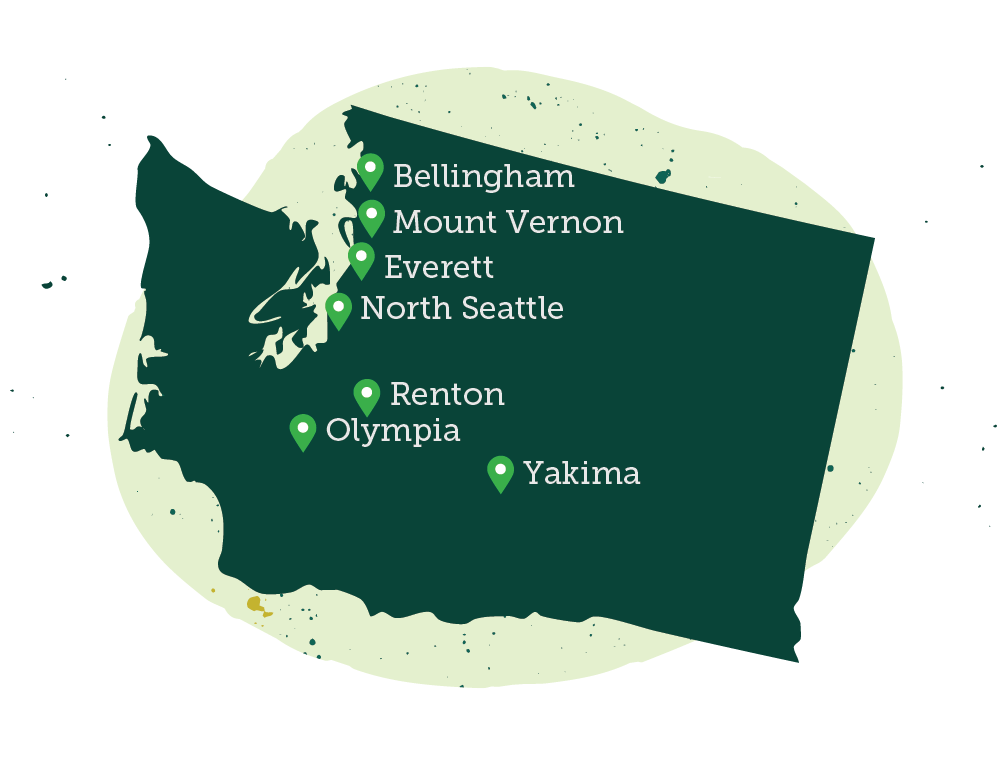
- How close do you want it to be to your home or job? EBC has seven Washington campuses: Bellingham, Mount Vernon, Everett, Shoreline (North Seattle), Renton, Olympia, and Yakima.
- Does the program include the 750 hours Washington requires, and what’s taught in those hours?
- Is there a small student-to-instructor ratio?
- What do you expect in the way of faculty training and the school’s technology and equipment?
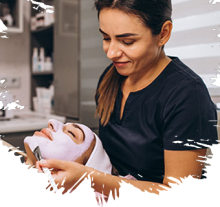
- How much time will you spend working with real clients?
- Do you need a variety of class scheduling options to accommodate your work schedule or are you flexible?
These questions help you prepare to tour schools both online and in person. Once your list is ready, use the checklist below to confirm each school’s answers.
Your Esthetician School Checklist

A lot of what you need to know is already available; you just need to know where to look. For each question, we’ll tell you what to ask for, where to find it, and how our Esthetics program answers it.
1. Is this school accredited, and if so, by whom? Is it approved by the state?
Why it’s important: Accreditation tells you a school meets national education standards. For beauty schools, the national accreditor is the National Accrediting Commission of Career Arts and Sciences (NACCAS). State approval matters just as much, because the Washington State Department of Licensing licenses the schools where you’ll earn your training hours. Ask for proof of both, and ask whether the school’s accreditation means financial aid is available.
Where to look: Start on the school’s website. Accreditation is usually listed on an About, Accreditation, or Credentials page, and sometimes in the footer or the school catalog. Then confirm it yourself. You can search any school on the NACCAS Accredited School Search, and the Department of Licensing explains how beauty schools are licensed in Washington.
At EBC: Our Awards & Credentials page lists our NACCAS accreditation and our state licensing. Being accredited means we’re recognized not only by the state, but on a national level. It also means financial aid is available to those who qualify.
2. Are the owners onsite and involved in the day-to-day operations?
Why it’s important: The people who run a school shape what it feels like to be a student there. When owners are on campus, you have a direct line to the people making decisions, and you can see for yourself how they treat students and staff.
Where to look: Look for an About, Our Story, or Leadership page on the school’s website. The best way to see how involved the owners are is to visit. Ask on your campus tour who you’ll go to if you need help.
At EBC: Thi Trieu and her husband opened Evergreen Beauty College in 1996, and it’s still run by the Trieu family today. Our owners are on-site, sharing what they’ve learned with students. Learn more about our leadership team before you visit.3. What skills and techniques are taught in your 750-hour Esthetics program?
Why it’s important: Washington requires 750 hours of training for an esthetician license, but schools spend those hours differently. Look at what’s taught in each phase and how much of your time you’ll spend working on real clients, since that’s where your skills come together. Ask which professional product lines you’ll train with.
Where to look: Most schools post a program overview on the program page. The full curriculum and hour breakdown usually live in the school catalog, which is often linked from a Consumer Information or Disclosures page. Ask admissions how much time you’ll spend in the student spa.
At EBC: What we teach runs in three phases:
- Phase I: skin physiology, microbiology, first aid, client care, hair removal, facial massage, makeup application, and microdermabrasion
- Phase II: client consultation, facials, extractions, galvanic treatments, high frequency, chemical peels, and eyelash extensions
- Phase III: an externship, state board prep, your portfolio, and business operations
Our campuses have spas where students work with paying customers, and we’re proud to be an American Association of Career Schools (AACS) member school. Starting in 2027, we’ll be partnered with Dermalogica and Bourgeois Lashes. See the full breakdown on our Esthetics program page, or read the program outline in the EBC Catalog.
4. What are the qualifications and experience levels of your instructors?
Why it’s important: Your instructors are the people you’ll learn from every day, in the classroom and in the student spa. Ask about their licenses, how long they’ve worked in skin care, and how many students each instructor works with at a time.
Where to look: Some schools share instructor bios on a campus or About page, but you may need to ask directly. The admissions department can tell you who teaches the esthetics program at your campus, then you can confirm any Washington license on the Department of Licensing’s license verification page.
At EBC: You’ll meet our esthetics educators when you schedule a tour. We also train new educators through our own Instructor Training program.
5. What is your absentee or leave of absence policy after classes start?
Why it’s important: Life happens, and you may need to miss a day or so. Your school’s attendance and leave of absence policies decide what happens next. They cover how you make up missed hours, how a leave of absence works, and whether missing time can move your graduation date or add to your costs. Attendance can also affect what you’re eligible for while you’re in school, like an externship. Ask how make-up hours work, how to request a leave, and what happens if you need more time to finish.
Where to look: These policies are in the school catalog or student handbook. Schools usually link them from a Consumer Information or Disclosures page. Read them before you sign your enrollment agreement, and ask admissions to walk you through anything that’s unclear.
At EBC: Our attendance, make-up, and leave of absence policies are in the EBC Catalog, which you’ll also find on our Disclosures page. Make-up time for absences is limited, and you’ll need to finish within a maximum time frame based on your program length. Before your program starts, our admissions team will give you the date you need to finish by, based on your program and start date, so you’ll know your deadline from day one. Attendance matters for externships too. You’ll need strong attendance and grades to qualify for an externship.
6. What financing options and payments are accepted? And what financial aid is available?
Why it’s important: The cost of school includes more than tuition. Books, your kit, equipment, and fees all add up, so ask for a full cost breakdown in writing. Ask which types of aid you can apply for and whether the school offers payment options.
Where to look: Start with the school’s Tuition or Financial Aid page. Many schools also post a cost of attendance sheet and a net price calculator, which are often linked from the Financial Aid or Consumer Information page. The catalog and your enrollment agreement list costs in detail. Before you enroll, ask the financial aid office to walk you through your options.
At EBC: You’ll find current tuition and fees on our Esthetics program page. You can apply for grants, loans, and scholarships, and we offer payment options too. Every student gets a free financial aid appointment to go over all of their options, including scholarships, loans, and special programs like the Worker Retraining Program. Our Financial Aid page walks you through what’s available, and our Disclosures page has our cost of attendance and a net price calculator for each campus. Financial aid is available to those who qualify.
7. What are your school’s graduation and job placement rates?
Why it’s important: Outcome information shows how students at a school have done, including how many finish the program. Ask for information on the esthetics program specifically, not just the school overall, and the year it’s from.
Where to look: Schools usually share this in their consumer disclosures, on a page called Consumer Information or Disclosures. You can also compare schools on the U.S. Department of Education’s College Navigator and on Washington’s Career Bridge.
At EBC: Our Disclosures page includes the EBC Catalog, our Consumer Brochure, our Annual Disclosure Notices, cost of attendance, and a link to College Navigator.
8. Do you offer test preparation materials to help your students study for the state licensing exam?
Why it’s important: To get your Washington license, you’ll need to pass a written exam and a practical exam. When prep is built into your hours, you practice for both as part of your training. Ask how the school helps you get ready for the practical exam, since it’s hands-on.
Where to look: Check the curriculum on the program page or in the school catalog for state board prep. The Department of Licensing explains the exams themselves.
At EBC: State board prep is built into Phase III of our Esthetics program, so it’s part of your 750 hours.
9. Does the program include business training?
Why it’s important: Skin care skills are only part of working with clients. Business training covers things like retail, the customer experience, and building your clientele. Ask what topics are covered and whether you’ll earn a certificate.
Where to look: Check the program page and the curriculum in the school catalog. Some schools also have a separate business training page.
At EBC: Phase III of Esthetics covers business operations, your portfolio, and your resume. Our Business Training curriculum covers retailing, the customer experience, and building your business. Complete the curriculum and pass all exams and quizzes, and you’ll earn the business training certificate.
10. What schedule options do you offer?
Why it’s important: If you’re working, raising a family, or changing careers, your schedule matters as much as the program. Ask about class times, how many hours you’ll be on campus each day, and how much coursework you can do online.
Where to look: Program pages usually list schedule options, but class times can vary by campus. Ask admissions for the schedule at the campus you’re considering.
At EBC: Our EverFlex schedule gives you flexibility and freedom: 4 hours on campus each day and 10 hours of online coursework each week. Morning, afternoon, and evening classes are available, depending on the campus. Visit our Esthetics program page to learn more.
Make Your Choice
When all your questions have been answered, review all your notes. Read over your list of priorities. Set aside any school you couldn’t confirm with NACCAS and the Department of Licensing, then compare the rest. Make an educated choice of the best program to give you the training you need. You also need it at a cost you can handle, with a schedule that works for you.
When you’re ready to see EBC for yourself, we’d love to show you around. Schedule a tour, get more info, or apply online.
Esthetician School FAQ
How do I become a licensed esthetician in Washington?
You’ll need to be at least 17, complete 750 hours of training at a school, and pass the state’s written and practical exams. The Washington State Department of Licensing lists every requirement. Our Esthetics program is 750 hours and includes state board prep.
What are the requirements for enrolling in an accredited esthetician school?
They vary by school. At EBC, you’ll need to be at least 16, have a high school diploma or GED, bring a valid photo ID, and complete an admissions interview. Our Enrolling in Beauty School page walks you through the steps.
Can I go to esthetician school on a flexible schedule?
Yes. With EBC’s EverFlex schedule, you’re on campus 4 hours a day and complete 10 hours of coursework online each week. Morning, afternoon, and evening classes are available, depending on the campus.
Does Evergreen Beauty College provide hands-on training to esthetics students?
Yes. Evergreen Beauty College campuses have student spas where esthetics students work with paying customers. Phase III of the 750-hour Esthetics program has an opportunity of an externship, where students earn school hours shadowing at a salon or spa of their choice. Students need strong attendance and grades to qualify. Learn more about externships at EBC.