
The Short Answer
You build a clientele in Seattle the same way Evergreen graduates have been doing it for over 25 years: by showing up consistently, taking great care of every client, asking each one to rebook before they leave, and turning happy customers into your best marketing. Most new beauty pros start to see real momentum somewhere between months three and six.
What “Building a Clientele” Actually Looks Like
Congratulations on finishing beauty school! You’ve got the technical skills and the hands-on hours. You’ve passed your boards and received your license. Now the real work begins: building a book of clients who know you, trust you, and tell their friends about you.
Whether you’re a cosmetologist, nail tech, esthetician, or barber, building your clientele is where you’ll devote a lot of your time early in your working life. That doesn’t happen in a single big moment. Instead, it’s built in dozens of small ones, like a thoughtful rebook, a kind follow-up text, a late-night Instagram post, or a model night that turned into a paying client six weeks later. Done consistently, those small moments add up to a fully booked week.
This guide walks you through the steps that work, the timeline that’s realistic, and what the Seattle market actually looks like for a new beauty professional.
Your First Year in the Business
Days 1–30: Set Up the Engine
Your first month is about laying the groundwork for your future book. Tell every person you know, whether that be friends, family, former classmates, your neighbor, or your dental hygienist, that you’re licensed and taking appointments. Most people are excited to discover a stylist they know personally.
Hold a couple of model nights at a reduced price. The point isn’t the money. The point is to create some buzz, take some before and after photos for your portfolio, and get more practice talking to real, paying clients in your chair.
You should also put some legwork into business management and marketing yourself. This includes:
- Finding an appointment booking app you like and can use
- Setting up professional social media accounts (and possibly a social media scheduling app, like Buffer, Later, or Hootsuite, where you can quickly post to all your channels at once)
- Intentionally scheduling time to take portfolio photos regularly
When it comes to portfolio photos, make sure you get clients’ permission first. When posting them online, make sure you use location tags. Seattle clients search by neighborhood, so tag yours when you post.
Give yourself time to get into a consistent rhythm with posting content. Three or four posts spread out over a week is better than the occasional burst of posts.
Days 30–60: Build the Two Habits That Matter Most
Social media is important, but word of mouth and client relations are even more important. There are two habits that underpin these: rebook requests and follow ups. Practicing these habits is simple. You should make sure that:
- Every client gets asked to rebook before they leave
- Every client gets a personal message within 48 hours
That’s it. Most new pros skip these, or fail to do them consistently, and wonder why their book isn’t growing.
Days 60–90: Lean into Referrals
By month three, you should have a few happy clients. Now ask them to share you. One idea is to create a simple referral program: offer a small service add-on or product credit for both the referrer and the new client. You can also run a giveaway with some product or a gift card—these make for great social media content.
Referrals help turn one client into two, and two into four.
Months 4–6: Watch What’s Working
Somewhere in here, a core group of regulars usually starts to form. Pay attention to where they came from: referrals, Instagram, Yelp, the salon’s walk-in traffic, your former classmate. Do more of whatever is working. Drop whatever isn’t without guilt. You have to do what works for you.
Months 7–12: Refine and Decide
By the end of your first year, you’ve got data: about your clients and about you. You know which services you love, which clients fill your chair, and what your pricing should look like next.
You can start specializing. Maybe you’ve become the balayage person, or the textured-hair specialist, or the one everyone trusts with a big chop. And you can start asking the bigger question: is your current work setting still the right one?
The Weekly Playbook
These are the practices that, done together, build a clientele. None of them are complicated. All of them require consistency.
Model nights: Once or twice a month, fill weeknight gaps with reduced-price model services. The work goes in your portfolio. The clients often come back at full price.
The rebooking script: Before every client gets out of your chair: “Want me to put your next appointment on the books now? Most clients come back in four to six weeks.” Pre-booked clients return at a much higher rate than those who say, “I’ll text you.”
The 48-hour follow-up: A short, personal DM or text within two days of every appointment. Not a marketing blast. A real check-in. “Hi Maya, it was great seeing you Thursday. Hope the color’s settling in. Let me know how it feels after a wash or two.”
Referral incentives: Keep it simple: a complimentary deep conditioner, a $10 credit, a retail discount. Both the referrer and the new client get something. Tell every happy client.
Social media cadence: Three to five posts a week across Instagram and TikTok if you can manage both, or just one platform done well. Mix before-and-afters, behind-the-scenes process, short tutorials, and the occasional personal post. Use Seattle and neighborhood hashtags. Tag the salon’s location.
Google and Yelp: If you’re at a salon with a fixed address, ask about being added to its Google Business Profile and Yelp listing. If you’re at a chair rental, you may be able to create your own.
Retail, the EBC way: Recommend the products you actually used on the client. Never push. Evergreen’s Business Training program teaches retailing as a service (“prescribe, not sell”), and it’s one of the most reliable income streams a stylist can build alongside services.
What It’s Like to Work in Seattle
New beauty pros in the Seattle area generally work in one of two models, and the difference matters when you’re planning your first year.
Commission and Hourly Salon Positions
Most new graduates start at an established salon as a commission stylist or hourly assistant. The trade-off is straightforward: you give up some of your service revenue in exchange for built-in foot traffic, mentorship from senior stylists, a regular paycheck while you’re building, and someone else handling the paperwork. Indeed and similar job boards list a steady volume of openings for barber shops, salons, and spas across the Seattle metro at any given time.
For most new pros, this is the right starting point. You’ll build speed, confidence, and a starter book in an environment that’s already set up to bring you clients.
Booth and Chair Rentals
Once you’ve got a book that will follow you, chair rental becomes an option. You pay a weekly or monthly rate for the space, and everything else (products, booking, marketing, taxes) is yours to run.
Booth rentals usually have a weekly rate. Some include furniture and utilities; others don’t.
Again, this may not be the best starting point for a brand-new professional. Booth rental rewards stylists who already have demand. If you’re still building, the math usually works better at a commission salon for a while.
You can see the full Seattle chair and booth rental inventory at Salon Renter, and current Seattle cosmetologist job listings on Indeed.
Tools and Templates You Can Use Today
Booking systems that independent beauty pros commonly use include Vagaro, Booksy, Zenoti, and GlossGenius. If your salon uses a central system, default to that.
A rebooking line that works: “Your color will start to soften around the four-week mark—want me to put you on the books now so you get the time slot you want?”
A 48-hour follow-up template: “Hi [name], it was so good to see you on [day]. I hope you’re loving your [service]. If anything ever feels off, just let me know and we’ll get you back in. Otherwise, I’ll see you on [next date].”
A referral program message: “Send a friend my way and you’ll both get [incentive] on your next visit. Just have them mention your name when they book.”
How Evergreen Prepares You to Create Repeat Business
Building a clientele in Seattle isn’t something you figure out by accident after graduation. At Evergreen Beauty College, it’s built into the program.
All of our programs have three phases built into them. Phase one is foundational skills. Phase two is about advanced techniques and salon-floor work with real paying customers. Phase three explicitly covers externships, state board prep, portfolio development, resume and cover letter writing, and starting and operating a business. By the time you graduate, you’ll already have practiced everything in this guide on real, paying clients in our campus salons. It’s the part of beauty school lots of schools skip. We don’t.
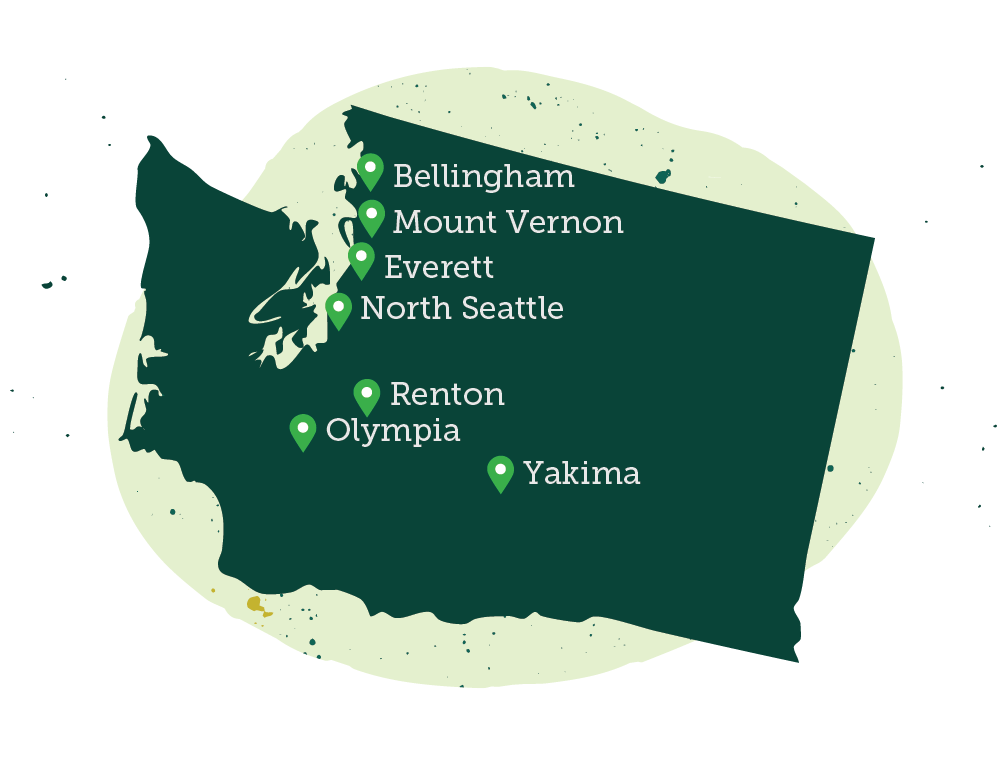
With Seattle-area campuses in North Seattle (Shoreline), Renton, and Everett, you’ll train in the same metro market you’re about to launch into. Our flexible EverFlex scheduling, which is four hours per day on campus and ten hours online per week, is built to fit alongside the rest of your life, so you can pursue your passion without putting the rest of your life on hold.
Three pillars guide everything we do: Believe. Belong. Become. We believe in the career you’re about to build. You belong to a community that’s been doing this in Seattle for over 25 years. And you’ll become the kind of professional who can walk out with a license and walk into a full book.
Learn Beauty, Inside and Out
Explore our Cosmetology program, a deeper look at our Business Training curriculum, or schedule a tour at the campus closest to you.
Financial aid available to those who qualify.
Frequently Asked Questions
How long does it take to build a clientele in beauty?
Most new beauty pros begin to see real book growth between months three and six, with a more stable base of regulars by month 12. Your exact timeline depends on your service area, your work setting, and how consistently you do the small things, like rebooking, follow-up, and social posting.
How do I get my first salon clients after beauty school?
Start with the people who already know you. Tell friends, family, former classmates, and former coworkers that you’re licensed and taking appointments. Hold model nights at a reduced price. Ask every happy client to refer one person.
Should I work at a salon first or rent a booth right out of school?
For most new grads, starting at a commission or hourly salon is the safer first move. You’ll build your starter book in an environment that’s already bringing in clients. Chair rental tends to work best once you’ve got a book that will follow you.
What’s the difference between booth rent and a commission salon?
A commission salon pays you a percentage of your services and typically handles products, marketing, and front-desk support. A booth rental is a flat weekly or monthly fee for the chair: you keep more of each service, but you also run everything else, including products, booking, marketing, and taxes.
Do I really need to be on social media?
You don’t have to be everywhere, but in 2026, some form of social presence is part of the job. The good news is consistency beats volume. Three to five thoughtful posts a week on one platform you actually enjoy will outperform a chaotic presence on four.
When should I raise my prices?
When you’re consistently booked out one to two weeks in advance, it’s reasonable to raise prices on new clients first, then on existing clients with notice. Evergreen’s Business Training program walks through pricing strategy as part of broader business preparation.
How important is rebooking, really?
It’s the single biggest variable between stylists who build a book in six months and stylists who are still struggling at twelve. Asking every client to rebook before they leave isn’t pushy—it’s a service. Most clients want to come back. They just need you to make it easy.
What if I’m not great at social media yet?
Don’t worry: it takes time. Pick one platform. Post consistently for 30 days. Watch what gets a response. Refine. The stylists with the best feeds didn’t start with the best feeds; they started by posting and figuring it out as they went along.