


aurema- stock.adobe.com
If you’re moving and you want to keep doing the work you love, you will need to confirm that your license is transferable.
Your first step should be to reach out to the cosmetology board in the state you’re moving to and confirm what your transfer process might look like. Here is a quick overview of the information that you will need:
Transferring your license, at a glance
- Contact the cosmetology board in the state you’re moving to.
- Ask whether they offer reciprocity or licensure by endorsement.
- Request the transfer (or endorsement) application.
- Submit your license verification, proof of hours, and fees.
- Complete any additional coursework the state requires.
- Pass any written or hands-on exam the state requires.

DragonImages
– stock.adobe.com
Does a cosmetology license transfer from state to state?
Sometimes, but not automatically. The state issues your cosmetology license, so it doesn’t simply carry over; the state that you are moving to may have different requirements. What you can do is apply to have the license you already hold recognized where you’re headed. States generally handle this in one of three ways:
- Reciprocity. Two states agree to honor each other’s licenses, so the process is usually quicker and may not require a new exam.
- Licensure by endorsement. The new state reviews your existing license and training, and if you meet its standards, issues you a license without requiring you to start over.
- Examination. If your hours or training don’t line up with the new state’s requirements, you may need to complete additional coursework or pass that state’s board exam.
Because each board decides which path applies to you, the smartest first move is to contact them directly.
How to transfer your cosmetology license, step by step
Contact your new state’s board
Start with the State Board of Cosmetology, where you’ll be living. This is your best source for learning about their specific transfer process and licensing requirements, and many boards post this information right on their website. Reach out as early as you can; some states have far more involved requirements than others, and giving yourself a head start means less time away from the chair.
Confirm your training hours
States will have varying minimum training hours. Compare your hours against your new state’s standard. If you don’t meet the new minimum, you may need to make up the difference. Advanced coursework that teaches new techniques and product formulations may help you meet those additional requirements, and in some cases, a board will specifically require updated safety and sanitation training.
Request the application and your license verification
Even in states with reciprocity agreements, you’ll still need to request a transfer application. You’ll usually also ask your original State Board to forward your license information to the new state, similar to the way a school sends a transcript. Your beauty school can often help you pull this information together.
Gather your documents and fees
Along with the application and your current license, expect to submit details about your education, proof of your hands-on experience, and a processing fee. Having these ready in advance keeps things moving.
Finish any additional coursework
If your new state requires extra hours or specific classes, you’ll complete those before the process can continue.
Take any required exam
Some states ask you to pass a written exam, a hands-on exam, or both before you can practice. Others accept your existing results. If you do need to sit for the board exam, our guide to what to expect can help you feel ready.
What is cosmetology reciprocity, and which states have it?
Reciprocity simply means two states have agreed to recognize each other’s cosmetology licenses, which can make moving between them much easier. Reciprocity and endorsement policies vary by state and can change over time. The most reliable way to know where your license stands is to check directly with the board in the state you’re moving to, since most publish their current policy online.
What about the Cosmetology Licensure Compact?
The Cosmetology Licensure Compact is an agreement among participating states, developed by the Council of State Governments, the U.S. Department of Defense, and the Future of the Beauty Industry Coalition, that will allow eligible cosmetologists to hold a single multistate license and practice in any member state.
First, two important things to know:
The compact is not up and running yet. While many states have signed on, the compact is not fully operational, meaning you can’t apply for a multistate license just yet. Member states are still building the systems and rules that will make it work, and applications are expected to open once that process is complete.
It only covers cosmetologists. The compact does not include estheticians or nail technicians. If you’re licensed in one of those fields, you’ll still need to follow each state’s individual licensing process for now.
Once active, the compact is designed to function much like a driver’s license, allowing you to use it across state lines. If you hold an active, unencumbered cosmetology license in your home state and that state is a member, you’ll be able to apply for a multistate license and, if you later move to another member state, transfer it there.
Here’s the encouraging part if you’re in Washington: our state has enacted the compact, along with a growing list of others that includes Alabama, Arizona, Colorado, Kansas, Kentucky, Maryland, Ohio, Tennessee, Virginia, and West Virginia.
Because the timeline and the list of member states keep changing, the official Cosmetology Licensure Compact site is the best place to check the current status and confirm whether both your current and future states participate.
Can I use my cosmetology license in another state without re-testing?
It depends on the state and on your training. If your new state offers licensure by endorsement and your hours meet their minimum, you may be able to transfer without taking another exam. If your training doesn’t match their requirements, you may need to complete additional coursework or pass that state’s board exam first.
Until your new license is issued, it’s important not to take clients there. There are consequences of practicing cosmetology without a license; it’s worth waiting until everything is official.
Transferring an esthetician, nail technician, or barber license
The same three-path framework, reciprocity, endorsement, or examination, generally applies whether you hold a cosmetology, esthetics, nail technology, or barbering license. The specifics, though, are set by each state for each license type, so always confirm the rules for your exact license.
Transferring a cosmetology license to or from Washington
If you’re moving to Washington, you’ll apply through the Washington State Department of Licensing and follow their requirements for out-of-state applicants. If you’re leaving Washington, you’ll request that your license information be verified and sent to your new state’s board.
How long does transferring a license take?
There’s no single timeline; it depends on the state and on whether you need additional hours or an exam. Contacting your new state’s board early is the best way to avoid surprises and minimize your time away from work.
Courses with Evergreen Beauty College
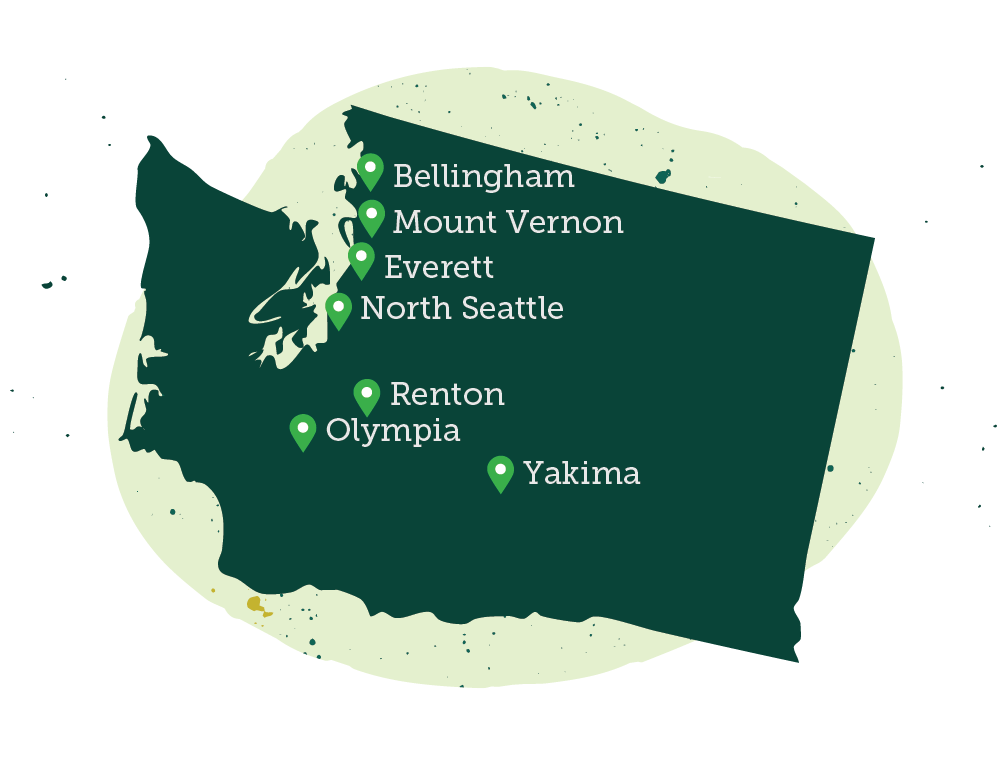
You’ll work with real clients, and our EverFlex schedule is built to fit real life: 4 hours on campus each day plus 10 hours online each week. Evergreen is accredited by the National Accrediting Commission of Career Arts and Sciences (NACCAS) and has seven campuses across Washington. Financial aid is available to those who qualify.
Have questions about your hours or your next step? Schedule a campus tour or request more information; we’re here when you’re ready.
Frequently Asked Questions
Does a cosmetology license transfer from state to state?
Not automatically. The state issues your license, so you apply to have it recognized in your new state through reciprocity, licensure by endorsement, or by completing that state’s requirements. Your new state’s board confirms which path applies to you.
Do I have to retake the state board exam when I move?
Maybe. If your new state offers endorsement and your training hours meet their minimum, you may not need to retest. If your hours fall short, you may need additional coursework or that state’s board exam.
Can I hold cosmetology licenses in two states at the same time?
Usually, yes. You can hold active licenses in more than one state as long as you keep each one renewed and meet each state’s continuing-education requirements.
How long does a cosmetology license transfer take?
It varies by state. A straightforward endorsement can be quick, while a transfer that requires extra hours or an exam can take several weeks or longer.
What documents do I need to transfer my license?
Typically, a transfer application requires your current license, verification of your license from your original state board, proof of your training hours and hands-on experience, and a processing fee.
Does my esthetician or nail technician license transfer the same way as a cosmetology license?
The general framework will apply, but each state sets its own rules for each license type. Always confirm the specifics for your exact license with the destination board.